


You spent real money getting people to your website. You can practically watch them arrive and then leave without doing a single thing you hoped they'd do. No quote requested. No form filled. No sale. Just traffic you paid for, evaporating in real time. Poof.
It's one of the most expensive problems in digital marketing, and it's everywhere. Traffic only matters when it turns into leads, sales, or signups. Everything else is rented attention you paid full price for and got nothing back from.
Sometimes the culprit is obvious a broken form, a page that won't load. More often it's structural and quieter: a non-existent value proposition, confusing navigation, or a beautiful design that somehow never tells anyone what to do next. This guide covers why sites underperform, how to find the friction, and what to fix first.

But here's the question worth sitting with before we start: if your pages look fine and load fine, why are visitors still leaving? We'll cover the obvious fixes and then the one most sites never get to.
What a "Conversion Problem" Can Cost You
A conversion happens when a visitor does the thing you want: buys, requests a quote, books a call, signs up. Your conversion rate is the percentage who do it. If 100 people visit and two buy, that's 2%.
Low conversion rates aren't just a soft "site performance" issue. They quietly raise your customer acquisition cost, drag down marketing ROI, and cap your growth, because you're paying to fill a bucket with a hole in it. Many businesses use conversion rate optimization to find those holes and patch them.
The numbers get real fast. Research from Akamai found that a one-second delay in load time can cut conversions by roughly 7%. On a site doing $50,000 a month, that single second can mean more than $40,000 in lost revenue a year. One second.
Before you can fix that, though, you have to find it. And the usual suspects are exactly where everyone looks first.
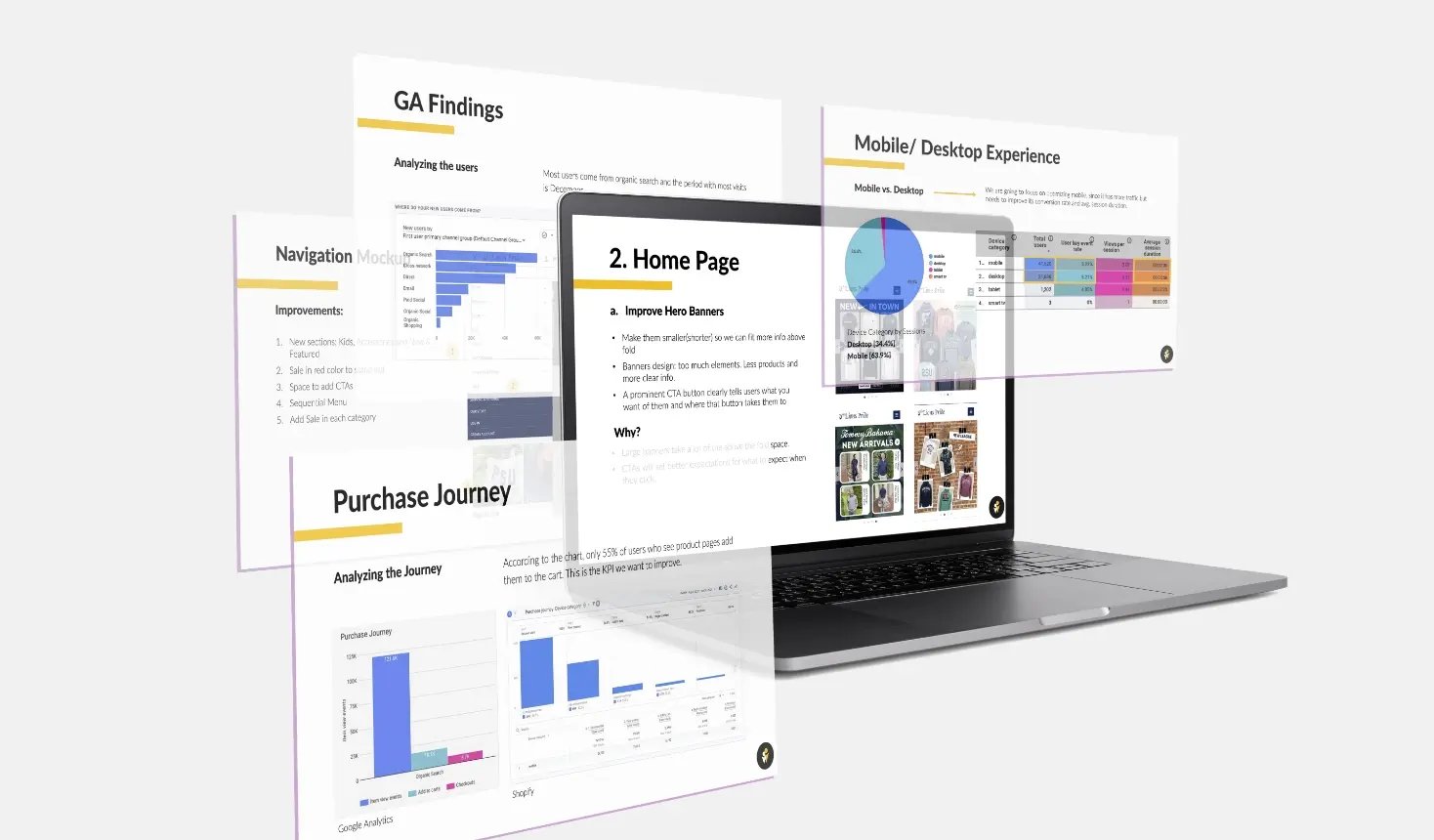
The Usual Suspects: The Friction Everyone Checks First
These are the tactical problems we see most often, and they're all worth fixing:
- Confusing navigation. Visitors should reach any important page in two or three clicks. Hidden pages and overloaded menus create friction before anyone even sees your offer.
- Slow load times. When a page takes more than two to three seconds, a chunk of your visitors are gone before the offer renders.
- Poor mobile usability. Mobile is now more than 60% of traffic for many sites. If your layout breaks on a phone, your conversions break with it.
- Weak calls to action. "Submit" and "Click Here" give people no reason to act. A CTA buried below the fold or lost in visual clutter is a CTA nobody clicks.
- Overcomplicated forms. Every extra field is a tiny tax on the visitor. Baymard Institute research shows trimming forms to the essentials can lift completions dramatically — in some tests, cutting fields more than doubled them. Ask only for what you need to move the conversation forward, and collect the rest later. For longer asks, interactive on-page calculators can capture intent with far less friction than a wall of fields.
User experience usually decides whether someone sticks around long enough to convert at all, and even modest usability gains move the needle. These fixes work best when paired with website design and development that's built around how people actually navigate and buy.
All of that is worth fixing. And here's the uncomfortable part: you can fix every single item on that list and still be stuck at 2%.
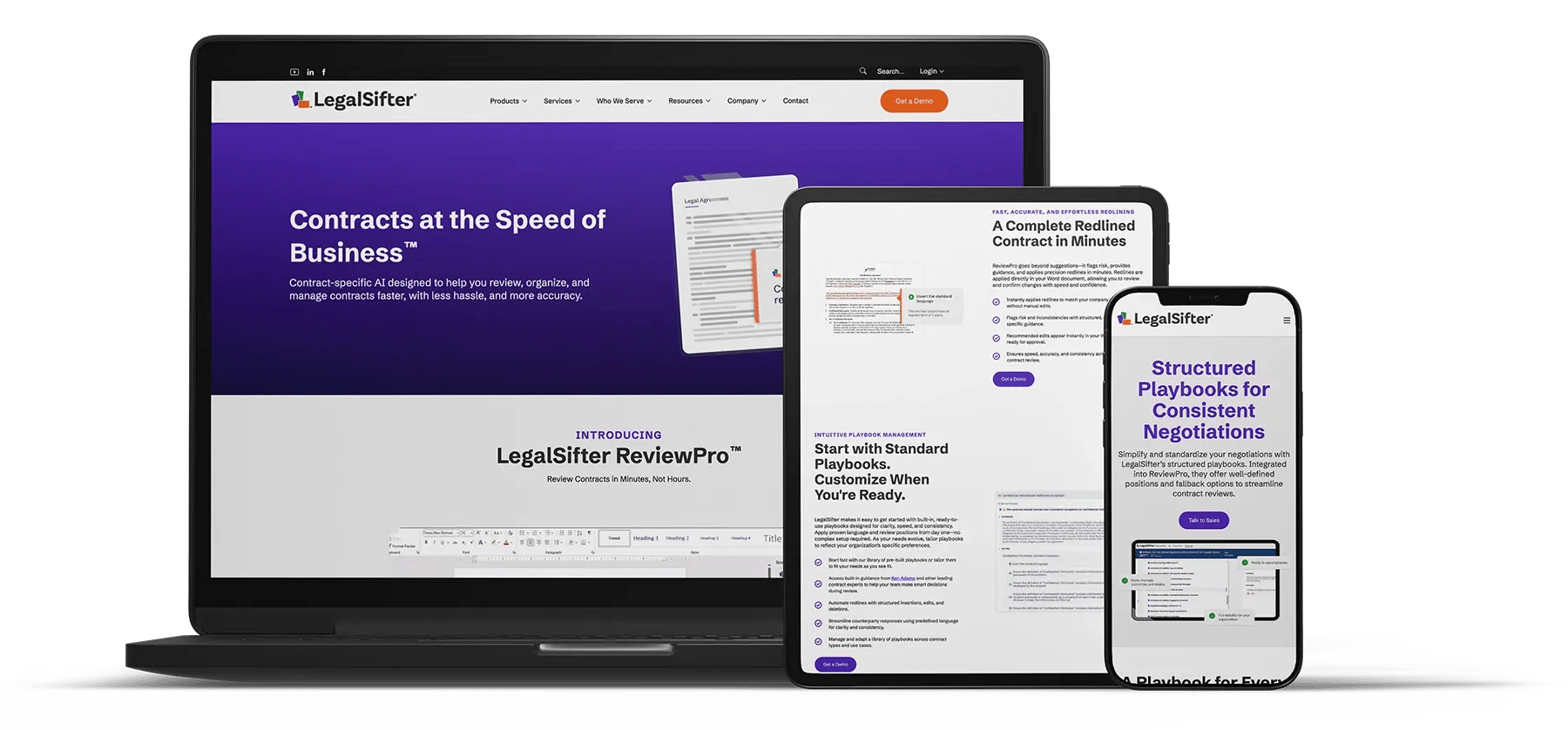
Why You Can Fix Everything and Still Not Convert
Here's what a decade of audits has taught us. The checklist above is table stakes. Necessary, but not the big thing actually holding you back. The highest-leverage conversion problem is almost never a button color. It's that your website is about you.
Most sites are built to describe the company: what we do, how long we've done it, our "innovative solutions" and "industry-leading service." The problem is that a visitor decides whether your page is relevant to them in a matter of seconds — and "innovative solutions" tells them nothing about their own goal. So they leave. Not because the button was the wrong shade of blue, but because they never saw themselves on the page.
This is also why "just buy more traffic" backfires. Paid traffic isn't neutral, it's diagnostic. Pour more of it onto a site that doesn't reflect the visitor's goal and you don't fix anything. You just pay to expose the same friction to more people, faster.
Better conversion performance can reduce the need for more ad spend. In one retail case study, a checkout redesign and clearer CTAs lifted conversions by 18% without increasing traffic. The company didn’t chase more visitors. It made better use of the visitors it already had.
So the real fix isn't another tactical tweak. It's changing who the page is about.
Make the Visitor the Hero
The strongest websites flip the script. Instead of leading with what the company offers, they lead with what the visitor is trying to accomplish — and position the business as the guide that gets them there.
Practically, that starts with your value proposition. Swap the vague claim for the specific outcome. Don't say "We provide advanced accounting solutions." Say "Automate your bookkeeping and get back 10 hours a month." State the outcome, who it's for, and why it matters now. Specifics beat superlatives every time.
This is the core of our Hero Mission Strategy® — a messaging framework built to clarify what your audience is trying to do and show, plainly, how you help them do it. The visitor is the hero. You're the guide who's walked the path before. When a page is framed that way, the "next step" stops feeling like a sales ask and starts feeling like the obvious move.
Once a visitor sees their goal reflected back at them, the only thing standing between them and action is whether they believe you. That's what trust elements are for — and they're proof you understand the visitor, not decoration:
- Real testimonials and verified reviews, especially for higher-ticket decisions.
- Recognizable client logos and relevant certifications.
- Transparent policies and contact information that's easy to find.
- Case studies that show your strategy turning into measurable outcomes.
Website Design Mistakes That Kill Conversions
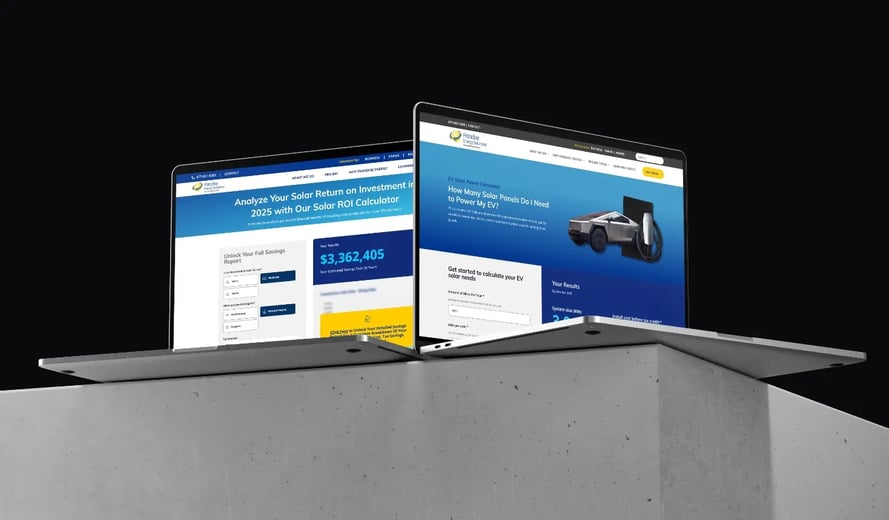
Design should support clarity. Some websites chase visual trends and lose sight of how people actually use the page. Auto-playing videos, heavy animation, and crowded layouts usually distract visitors from the primary action.
Another common issue is weak visual hierarchy. Buttons blend into the background. Key information gets pushed below oversized decorative elements.
A simple test works well here. You can ask someone unfamiliar with the site to complete a task while you watch. Where they pause is usually where the friction lives.
One way we’ve helped our clients address these issues is through inbound marketing and website strategy support that ties user experience to business goals. This helps to align your content with your Hero’s goals.
A 2026 Conversion Playbook You Can Run This Week
With the right frame in place, the tactical fixes finally pull their weight. Here's where we'd start:
Tighten the experience.
Simplify navigation and group pages around what visitors are trying to do, not your org chart. Compress images, drop unnecessary scripts, and run your site through Google Lighthouse and PageSpeed Insights to surface what's slowing it down. Confirm every layout holds up across phone, tablet, and desktop.
Sharpen the value proposition.
Make the core benefit unmistakable the second the page loads. Lead with the outcome, name who it's for, and cut the jargon.
Build trust on purpose.
Put your strongest proof — reviews, logos, case studies — where hesitation actually happens: near the decision and the CTA, not buried in the footer.
Strengthen your CTAs.
Use action-and-outcome language like "Start My Free Trial" or "Get My Quote." Place them at decision points and above the fold where it makes sense. Make the button impossible to mistake for anything else.
Simplify your forms.
Ask only for the essentials, use multi-step forms when the process is longer, and add autofill plus a short privacy note near sensitive fields.
One more free diagnostic you can run today: hand your site to someone unfamiliar with it, give them a task, and watch. Wherever they pause is where your friction lives.
And remember the front of the funnel matters too, sharper SEO and better-targeted paid search campaigns bring in visitors who are more likely to convert before you've tested a thing. One of the ways we help clients tie all of this together is through inbound marketing and website strategy that connects user experience directly to business goals — and to your Hero's mission.

Conversion FAQs - Fix Your Conversion Problems
-
What's a good website conversion rate? It depends heavily on your industry and the action you're measuring, so the oft-cited 2–3% all-industry average isn't very useful on its own. Benchmark against your specific industry and conversion type, then focus on steadily improving your own number over time.
-
Will more traffic fix low conversions? Usually not. If your site isn't converting the visitors you already have, more traffic just spreads the same friction across more people — at a higher cost. Fix the conversion problem first, then scale traffic into a site that's ready for it.
-
What should I fix first? Start with a focused audit. Most conversion problems trace back to a short list — slow pages, unclear messaging, weak CTAs, and missing trust signals — and unclear messaging is usually the one with the most upside.
Most website conversion problems trace back to the same short list: slow pages, unclear messaging, weak CTAs, and missing trust. Fixing them can lift results without spending a dollar more on traffic.
But underneath all of them is one bigger fix: build the site around your visitor's mission, not your company's résumé. You don't need more visitors. You need the ones you already have to land on a page, instantly see their own goal, and know exactly what to do next.
If you want a second set of eyes on what's holding your site back, you can book a free consultation with Robb to evaluate your website and lead-gen strategy.