

The “dirty little secret” of SEO and AEO in 2026? Google and the other search engines are still chasing the same one they’ve been chasing since Day One:
What does the searcher actually want?
Which results are most likely to give them a helpful answer?
Did those results truly deliver value?
Back in 1999, when I got my start in SEO — writing meta tags by hand — it was almost all about SEO best practices, code structure, and technical execution. All three of those things still matter today. But algorithms have gotten way smarter about rewarding content that actually serves people rather than content that just follows checklist tricks. They’ve gotten better at ranking the sites that deserve to be in the top five, not the ones with the sneakiest tactics.
Over 25+ years in online marketing and as President of PIC (formerly Pittsburgh Internet Consulting), I’ve seen evolutions like this a few times. What started as SEO 1.0 became inbound, became content strategy, became AEO alongside search — but at the end of the day search still asks the same three questions above every time.
At PIC, we believe that while SEO and AEO are distinct optimization tracks right now (with about 80% overlap), within a couple of years it’ll just be Search Optimization again. Users won’t consciously choose between “organic” or “AI results.” Those interfaces will look the same and serve the same end user intent. And if your content doesn’t help your audience succeed in their mission, it won’t perform well in either.
That’s where our Hero Mission Strategy® comes in.
The Problem with Personas
Over the years I’ve heard the words "buyer persona," "ideal customer," and "ICP" said thousands of times. Many teams go through the motions of creating them — even give them cute names — and build beautifully detailed documents.
The problem?
Then they never use them.
Marketing and sales build personas, file them away, and go back to targeting by industry, job title, or a catch-all “general audience.” That’s not strategy. That’s defaulting to old habits.
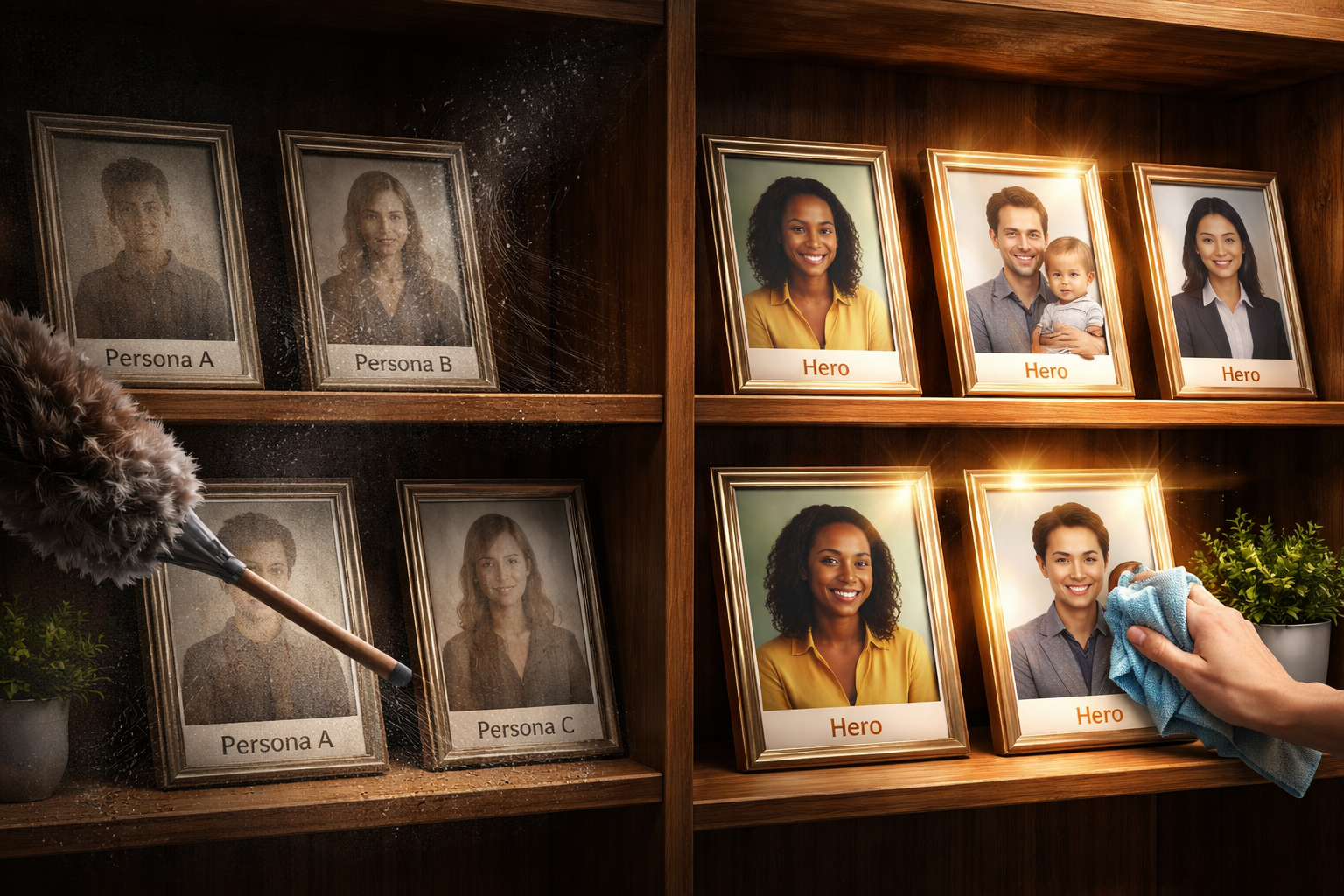
If you never reference your personas in messaging meetings, campaign planning, content sessions, or anything that shapes your actual work, they might as well be filed under “decor.”
They become useless. Because search algorithms, and real users, are not looking for broad demographic profiles. They are looking for answers to purposeful questions.
Flip the Model: Your Customer Is the Hero
This is where we flip the script. Instead of talking about who you think your audience is, ask what they’re trying to do.
Instead of asking: “Who are we targeting?”
We ask: “What is our Hero trying to accomplish?”
Each customer has a mission. A job that matters to them. The outcome for which they are accountable. When you understand that mission, everything changes:
-
Your messaging becomes about progress, not just positioning statements.
-
Your content becomes guidance, not product promotion.
-
Your campaigns become useful resources, not interruptions.
-
Your search visibility becomes about real answers, not keyword density.
When you help your Hero succeed, trust builds, and trust is the real currency in modern search and buyer decisions.
Search Has Evolved. So Should Your Content.
If you’re chasing long-tail search traffic (and you should be; the long tail is where intent lives), you’re essentially building a conversation map that aligns with the questions your Heroes are literally typing or speaking into search engines. This means content that serves conversations, not keywords.
So instead of:
-
“persona-centric copy”
-
“generalized industry messaging”
-
“top of funnel SEO pages with no real depth”
You build mission-oriented content arcs that match where your Hero is in their journey, from early exploration to confident purchase decision.
Search engines and AI assistants reward content that answers a question thoroughly and authentically. That’s what wins visibility now and will continue to win it as search evolves.
Yes, We Still Name Them.
In companies that fully embrace Hero Mission Strategy, we still make memorable Hero identities, like “Mrs. Incredible” or “Salesy Sam.”
-
But these aren’t pretty names on a PDF. They are living guides.
-
We refer to them in content planning meetings.
-
We measure content effectiveness against them.
-
We tie campaigns and messaging back to the actual problems our Heroes are solving.
Because once you focus on what they need, you quickly realize that fixing personas isn’t the problem. Making your strategy Hero-centric is the solution.
Stop Writing for the Engines.
If you found this post because you’re trying to figure out ICPs, personas, or content strategy, here’s the truth from someone who’s been in the trenches since the dial-up days:
-
Stop writing for the engines.
-
Stop regurgitating shallow SEO content with little practical value.
-
Stop optimizing around tricks.
Build real value for the people who are actually trying to solve real problems. Search engines are just trying to show what the user already wants: answers that help them move forward. When you build content that makes your Hero’s job easier, rankings follow. So does trust. So does business.
Want Help Defining Your Heroes?
If this resonates, take a discovery call with Robb, our VP of Business Development and strategist on Hero Mission work. He’ll help you evaluate:
-
How many Heroes your company truly serves
-
What their primary missions are
-
Where your current content isn’t supporting them
-
What a Hero-focused content strategy looks like
If your company qualifies, we’ll offer a free Mission Briefs workshop to map that out together.
Connect with Robb here: https://www.linkedin.com/in/robbluther/
Stop optimizing for checklists.
Start building for real people.
Start building for the Hero.