
Key Takeaways
-
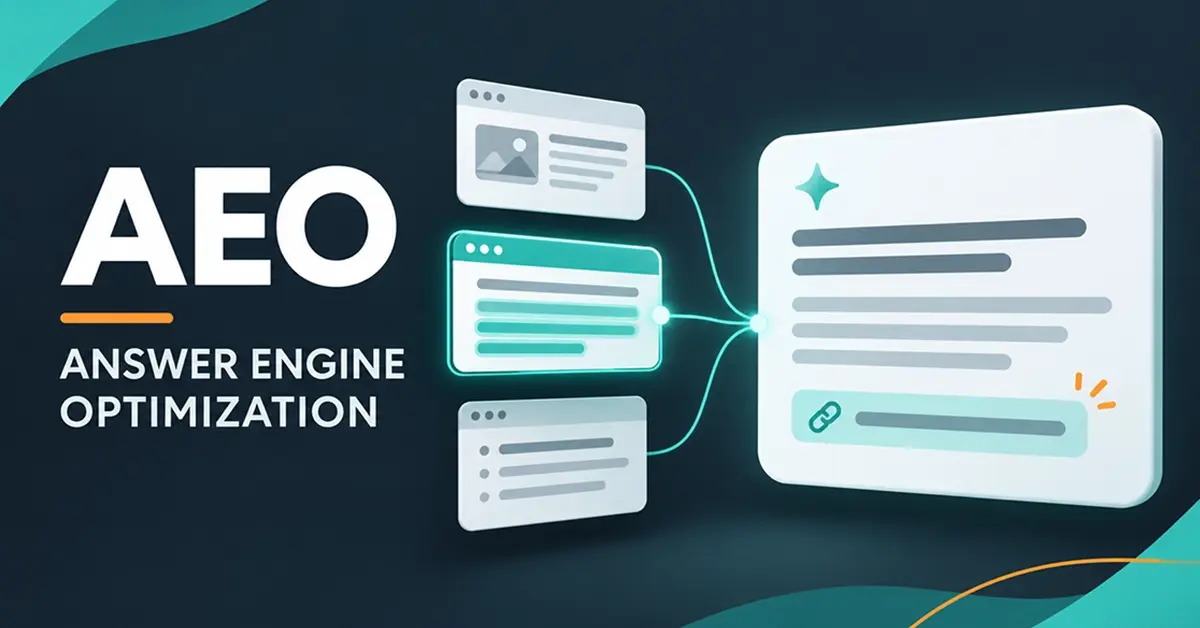
AEO means answer engine optimization. It's the practice of structuring your content so ChatGPT, Perplexity, Gemini, Claude, Google AI Overviews, and AI Mode can read it, trust it, and cite it as a direct answer.
-
AEO works on top of SEO, not instead of it. SEO competes for a spot in the ranked list. AEO competes for a spot inside the answer, and it still depends on a site search engines can crawl and trust.
-
Engines cite pages they can lift, check, and trust as current. That means a direct answer near the top, readable structure and schema, facts that match your reviews and listings, and dated details you keep up to date.
-
AEO sends real buyers. For Bactronix, PIC, a Pittsburgh digital marketing agency, structured service pages, content, internal links, and the Google Business Profile so they agreed, and from 2024 to 2025 the site drew 13 qualified leads from LLM platforms like ChatGPT and Claude.
AEO shows up in strategy decks, sales calls, and vendor pitches, usually right before someone tells you to add schema. Here's the plain version, then what the work looks like on a real page.
In marketing, AEO means answer engine optimization, not the medical term or the clothing brand.
AEO stands for answer engine optimization, the practice of structuring website content so answer engines such as ChatGPT, Perplexity, Gemini, Claude, Google AI Overviews, and AI Mode can read it, trust it, and cite it as a direct answer when someone asks a question a business should be able to answer.
An answer engine replies with one answer instead of a list
An answer engine is a tool that reads sources and writes one assembled reply to a question. Classic Google search hands you ten links and lets you pick. ChatGPT, Perplexity, Gemini, and Claude hand you a paragraph, sometimes with sources attached. Google now does both: AI Overviews sit above the regular results, and AI Mode turns the whole search into a back-and-forth.
That back-and-forth is what people mean by conversational search. The buyer asks a full question, reads the answer, then asks a follow-up. Your page either becomes part of that answer or it isn't in the conversation.
So how does AEO work? You make your content easy for those tools to find, read, and trust enough to quote. Most of that is writing and page structure. Some of it happens off your site entirely.
AEO and SEO work together but compete for different spots
AEO doesn't replace SEO. If Google can't crawl your site, understand it, or connect it to a real business, an answer engine won't do any better. What changes is the spot you're competing for.
| Comparison point | SEO | AEO |
|---|---|---|
| Goal | Earn a ranked position and a click from search results. | Earn a mention or citation inside an assembled answer. |
| Unit of competition | A page competing against other pages in a results list. | A passage competing to become part of the response. |
| Signals | Relevance, technical health, links, authority, and content quality. | Direct answers, structure, corroboration, freshness, and facts that are easy to retrieve. |
| How success is measured | Rankings, organic traffic, conversions, and revenue. | Citations over time, AI referral traffic, and leads that name an AI tool. |
SEO wins you a spot on the list. AEO wins you a spot in the answer. For the longer breakdown, read the full AEO vs SEO comparison.
This isn't a detour away from search, either. In its Q2 2026 earnings update on July 22, 2026, Alphabet said AI Mode has passed 1 billion monthly active users since expanding globally in October 2025, and that AI Mode, like AI Overviews, is driving an incremental increase in Search queries. People are searching more, in more formats. AEO is how your site shows up in the newer ones.
Answer engines choose sources they can lift, check, and trust as current
Nobody outside these companies knows exactly how each model picks its sources, and the same question can get a different answer on a different day. Still, the pages that get cited tend to share four traits.
The first is a direct answer near the top. If your page takes four paragraphs to say what the service is, the engine has to dig. A competitor's page that answers in the first two sentences is simply easier to use.
The second is structure a machine can read. Clear headings, short paragraphs that each handle one point, and schema markup that labels what the page covers. Schema won't make a weak page good, but it removes guesswork.
The third is corroboration. An engine is more comfortable repeating a claim when other sources say the same thing. If your site lists one set of services, your Google reviews describe another, and your business listings still show an old address, you've handed the engine a reason to look elsewhere.
The fourth is freshness, and it's the one most sites neglect. A page that still mentions last year's pricing, a service you retired, or a process you dropped reads as a risk, and engines are built to avoid repeating stale information. So date the facts that change. Put "Updated September 2026" near pricing, service areas, and anything tied to a regulation or a platform feature. When a fact changes, change the page that week and note what changed. Pages you maintain on a schedule give the engine a reason to trust today's version.
Is your website helping customers find you?
Take our free 3-minute SEO Health Check. Answer quick questions, find out your SEO personality, and get a free workbook at the end.
Brochure copy talks about the business, answer copy helps the buyer decide
Here's what that looks like on a real page. This is an illustrative example, not a client: a heating company's furnace replacement page.
The brochure version
"We're a family-owned team committed to excellence, integrity, and outstanding customer care. Our experienced technicians use the latest equipment to keep your family comfortable all year long. Contact us today to learn more!"
Nothing in it is false. It's also nothing a buyer can use. It doesn't say who needs a new furnace, what it costs, how long it takes, or what happens first. An answer engine asked "how much does a furnace replacement cost?" has nothing to lift here except the word excellence.
The answer version
"Furnace replacement is for homeowners whose furnace keeps breaking down, can't keep the house warm, or would cost more to repair than to replace. For a typical single-family home, a new furnace costs [your real installed range], and most straightforward replacements are finished in one day."
"Price depends on the size of the home, the efficiency rating you choose, and whether the ductwork or venting needs changes. Every job starts with an in-home check and a written quote before anything is scheduled."
The first two sentences answer who it's for, what it costs, and how long it takes. The next two explain what moves the price and what happens first. A buyer can make a decision from that, and an engine can quote it without inventing the missing pieces. The bracket is on purpose. Put your real range there, because a range with conditions beats "call for pricing" for buyers and machines alike.
FAQ blocks are the easiest place for most sites to start. Pick the four to six questions that stop buyers from calling: cost, timing, fit, process, service area. Answer each in two or three plain sentences, then add FAQ schema so machines can see the question-and-answer pairs. It's a small build on a page you already have. Just remember that schema only labels what's there. If the answer is vague, the markup labels a vague answer.
Real AEO work looks like cleaning up the whole system
Here's what AEO looked like for an actual client.
PIC structured the service information so LLMs could understand the offerings, improved clarity and authority signals across the site, re-optimized existing blog content, built internal links from informational articles to the service pages, and optimized the Google Business Profile. By the end, the site, the content, and the local listings said the same thing about the business.
The client generated 13 qualified leads that originated from LLM platforms like ChatGPT and Claude, while organic sessions rose 96% and organic leads rose 85.8%. The full breakdown is in the Bactronix case study.
Thirteen leads won't carry a business on their own. What they show is that answer engines send qualified buyers once the page and the signals around it line up, and regular organic results grew over the same stretch.
Optimizing for AI search starts with a page you already have
Some people call this AI search engine optimization. Whatever the label, the first move is the same: skip the site-wide overhaul. Pick one service page that should bring in qualified leads and check it against these questions.
-
Does the first screen say who the service is for?
-
Does it answer the obvious cost and timing questions, even with a range?
-
Does it explain the process before it asks for the sale?
-
Does it use the words a buyer would type, not only your internal terms?
-
Does it link to supporting articles that go deeper?
-
Do your reviews, listings, and Google Business Profile back up the same claims?
-
Does it show when the facts were last updated?
An AEO-ready page puts the answer first. It says who the service is for, what it costs, how long it takes, and what happens next, in the words a buyer would actually type. Your reviews, listings, and Google Business Profile back up the same facts, and anything that changes carries a date, so answer engines can quote it with confidence.
Every "no" is a fix. Once the page is solid, build around it: the service page answers the commercial question, supporting articles answer the research questions, and internal links connect them so a buyer can move from learning to deciding without starting over. That's the core of an AEO strategy, and it's the same structure that helps your regular SEO.
AEO results show up as a trend not a single screenshot
AI answers vary. Wording, location, the model version, and what the engine retrieves that day all change the result, so one check on one afternoon tells you very little. Watch three things over months instead.
First, citations and mentions over time for the questions your buyers actually ask. Second, referral traffic from AI tools in your analytics, which shows up as visits from sites like chatgpt.com and perplexity.ai. Third, leads that say they found you through ChatGPT or another AI tool. If your forms don't ask, "How did you hear about us?", add the field.
Then check whether those leads are any good. Visibility that brings the wrong buyers is still a miss. Treat it the same way you'd approach measuring what's working in SEO: visibility, traffic, leads, and revenue where attribution allows. The reporting will be directional, not perfect.
AEO belongs inside your website and search strategy
AEO works best when nobody treats it as a separate campaign. It lives in how you build your website, write service pages, plan topic clusters, and keep your local listings clean.
That's how we run it inside Walk With You Marketing®. In Hero Mission Strategy®, the first question isn't "what keyword can we rank for?" It's "what is the hero trying to accomplish?" Answer that clearly on the page and you've done most of the AEO work already.
So what is answer engine optimization once you strip away the acronym? It's the habit of putting the answer where a buyer, and a machine, can find it in the first few seconds.
The first step is seeing where you stand today
Run the one-page check above. Then ask ChatGPT, Perplexity, and Google three or four questions that page should answer and note whether you show up and who does instead.
Want a second opinion? PIC runs a detailed AEO and GEO audit so you can see where you stand in AI search. If you'd rather talk it through first, start a conversation.
Frequently asked questions
What does AEO stand for?
AEO stands for answer engine optimization. It's the practice of making your content easy for answer engines like ChatGPT, Perplexity, Gemini, Claude, and Google AI Overviews to read, trust, and cite. The acronym has other meanings outside marketing, but in search this is the one people mean.
What's the difference between AEO and GEO?
They overlap heavily. AEO, answer engine optimization, focuses on getting your content used as the direct answer to a question. GEO, generative engine optimization, is the broader work of shaping how generative AI tools describe and recommend your brand. Most practical work, like clear answers, schema, and consistent business facts, helps both.
Does AEO replace SEO?
No. Answer engines still depend on pages they can crawl and trust, and Google's AI features sit on top of Google Search. SEO keeps your site findable and credible. AEO shapes the content so it can be pulled into an answer. You need both.
How often should AEO content be updated?
Update a page whenever a fact on it changes, like pricing, service areas, or a process. Beyond that, review your most important pages at least once a quarter and show a visible updated date when you do. Stale details give an answer engine a reason to cite someone else.
Do I need schema for AEO?
Schema helps, but it isn't required. It labels your content, like FAQ pairs, services, and business details, so machines can read it with less guesswork. It won't fix a page that never answers the question, so write the answer first and add the markup second.
Can I do AEO myself?
Yes, the basics are doable in-house. Rewrite one important page so it answers the buyer's main question in the first two sentences, add a short FAQ, and make sure your listings and reviews match what the page says. Outside help pays off at scale: auditing many pages, tracking citations over time, and handling the technical side.